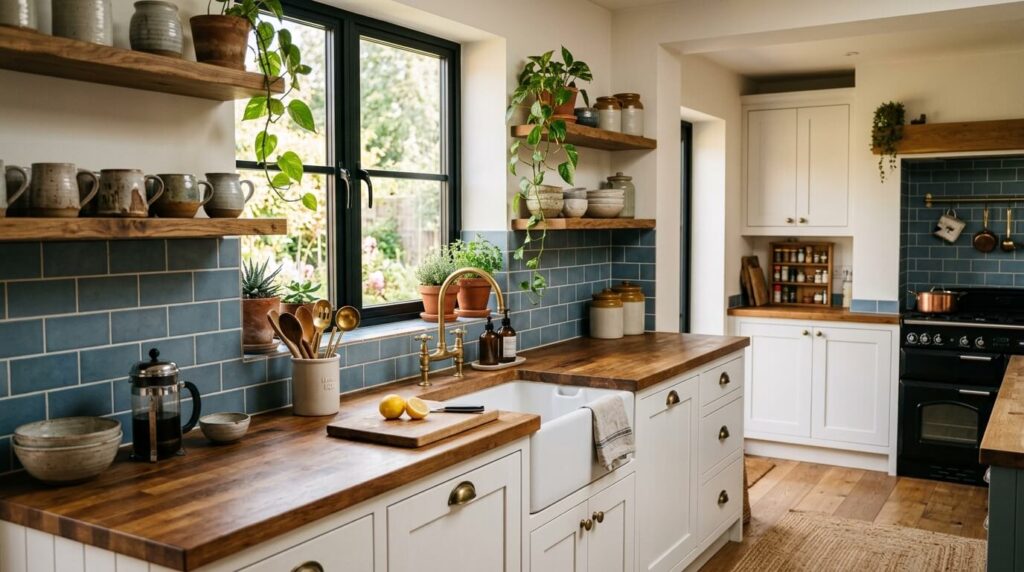
Picking a countertop or a backsplash on its own is easy. Picking ones that work together — without looking matched, mismatched, or like two separate design decisions made a year apart — is the part that trips people up. Most kitchen counter and backsplash ideas you’ll find online are just photo galleries. This guide is built to be a decision-making tool instead: a simple framework for pairing the two, organized by the countertop material you already have (or want), plus the budget and practical details that actually determine how the finished kitchen looks and holds up.
How to Pair a Countertop and Backsplash (The Framework Competitors Skip)
Before choosing tile, decide which surface is going to lead the design and which one will support it. Designers call this identifying the visual “driver” — the countertop or the backsplash that carries the boldest color, pattern, or veining. Whichever one you choose as the driver, the other should be quieter so the two don’t compete for attention.
A few rules of thumb:
- If your countertop has strong veining or movement (marble, quartzite, busy granite), pair it with a solid-color or subtly textured backsplash. Let the stone be the star.
- If your countertop is a simple neutral (plain white or gray quartz, laminate, butcher block), your backsplash is free to be bold — a mosaic, a saturated color, or a graphic pattern.
- Match undertones, not just colors. A warm white quartz (cream, beige undertones) will clash with a cool white subway tile (blue-gray undertones) even though both read as “white” in a showroom. Bring a countertop sample to the tile aisle, or vice versa, and check them under your kitchen’s actual lighting.
- Decide order of installation early. Countertops are typically installed first, so the backsplash tile can be cut and fitted cleanly against the finished counter edge — doing it in reverse risks gaps and a less precise seam.
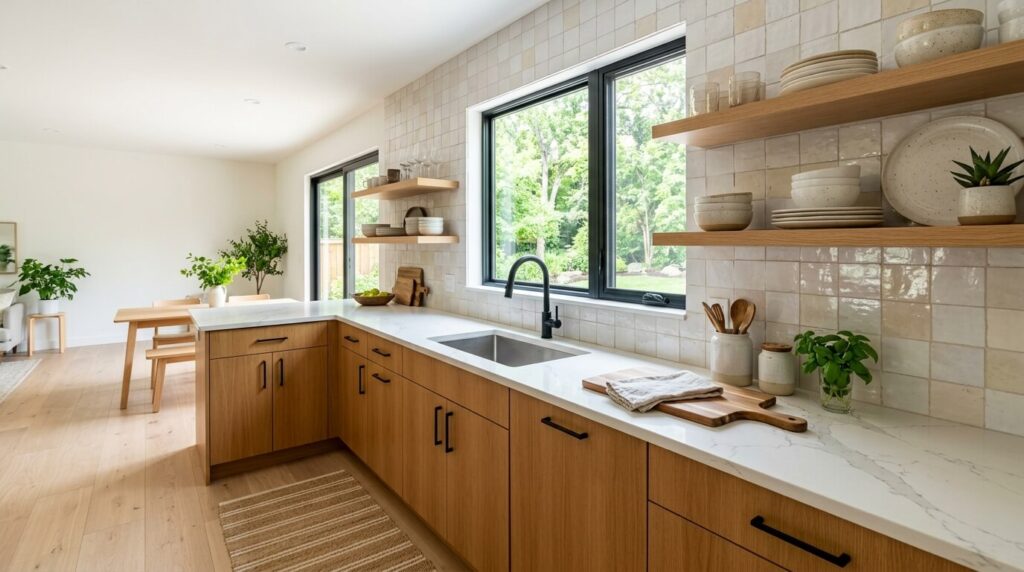
Kitchen Counter and Backsplash Ideas by Countertop Material
Quartz Countertops
Quartz is engineered, so its color and pattern are consistent slab to slab — which makes it a forgiving base for either a matching or contrasting backsplash. A plain white or “Super White”-style quartz counter pairs beautifully with a herringbone marble mosaic or zellige backsplash for texture without visual noise. For a more graphic look, a subtly patterned quartz counter looks sharp against a striking porcelain backsplash in a solid, saturated color.
Try: white quartz + handmade zellige tile, or a neutral quartz + navy/emerald subway tile for contrast.
Granite Countertops
Granite’s natural speckling and movement mean it usually reads best as the driver. A classic white or cream subway tile backsplash keeps the wall calm and lets the granite’s texture do the work — or you can echo a fleck of gold, black, or rust already present in the stone with a complementary grout or accent tile.
Try: dark granite + white subway tile with dark grout for a crisp, low-maintenance contrast.
Marble and Quartzite Countertops
If you love marble’s veining but not its maintenance, quartzite offers similar movement with more durability, and both pair well with a backsplash in the same material family. Running quartzite or marble mosaic tile up the wall in the same stone as the counter creates a seamless, high-end look; alternatively, a handmade zellige tile in a neutral tone adds texture without competing with the stone’s veining.
Try: quartzite counter + quartzite mosaic backsplash for a monochromatic, seamless look, or quartzite counter + textured zellige for contrast that still feels calm.

Butcher Block and Wood Countertops
Wood countertops bring warmth, so the backsplash decision usually comes down to leaning into that warmth or cooling it off. Smoky gray, ocean blue, or matte black tile creates intentional contrast against the wood tone; earthy neutrals (terracotta, sand, warm cream) lean into a cohesive, nature-driven palette instead.
Try: butcher block + cool blue-gray subway tile for contrast, or butcher block + terracotta zellige for a warm, cohesive look.
Soapstone and Concrete Countertops
Both materials have a matte, understated surface that plays well with texture. Soapstone pairs naturally with slate tile for a rustic, earthy kitchen, while concrete counters tend to look best against a simple ceramic subway tile or a large-format tile that won’t fight the counter’s industrial finish.
Try: soapstone + slate tile backsplash, or concrete counter + large-format porcelain tile.
Kitchen Counter and Backsplash Ideas by Style and Budget
Timeless and Classic
White or cream subway tile with a natural stone or quartz countertop is a pairing that rarely goes out of style, largely because it’s neutral enough to survive multiple rounds of cabinet color changes. It’s also one of the easier DIY-friendly options if you’re doing the install yourself.
Bold and Statement-Making
Full-height (counter-to-ceiling) backsplashes in a patterned tile, mosaic, or large-format marble-look slab turn the wall into the kitchen’s focal point. This works best when the countertop stays simple and neutral so it doesn’t compete with the wall.
Budget-Friendly and Rental-Friendly
A standard 4-inch backsplash (rather than full-height) uses far less tile and labor, which cuts material and installation cost significantly while still protecting the wall behind the counter. Peel-and-stick tile is another lower-cost, renter-friendly option for a temporary refresh — though it won’t hold up as well long-term as installed ceramic or porcelain.
Small Kitchens
Large-format tile and light, reflective finishes (glossy subway tile, light quartz) tend to make a small kitchen feel more open, while very busy patterns or dark grout lines can visually shrink the space. If you want pattern in a small kitchen, keep it to one accent zone — like behind the stove — rather than the whole wall.
Practical Planning: Height, Layout, Grout, and Install Order
- Backsplash height: A standard backsplash extends about 4 inches above the counter; a full-height backsplash runs to the underside of the upper cabinets or all the way to the ceiling for a more dramatic effect.
- Layout patterns: Beyond a straight stacked or brick-lay layout, herringbone and chevron patterns add movement and can make a wall feel taller; diamond-set tile does something similar.
- Grout color: Matching grout keeps a tile look seamless and calm; a contrasting grout (like white grout on dark tile) highlights the tile’s pattern and shape more dramatically.
- Durability and maintenance: Porcelain and ceramic tile resist heat and stains with minimal upkeep, while natural stone (marble, travertine, some granite) generally needs periodic sealing to resist staining and etching.
- Install order: Most contractors install the countertop first, then fit the backsplash tile against it — this produces a tighter, more finished seam than tiling before the counter goes in.

FAQ
What backsplash goes best with quartz countertops?
Both matching and contrasting work well with quartz because its color is consistent. A simple quartz counter can support a bold mosaic or patterned backsplash, while a patterned quartz looks best against a quiet, solid-color tile.
Should a backsplash match the countertop or contrast with it?
Either approach works — the key is picking one surface to be the visual “driver” (bolder pattern or color) and letting the other stay simpler, whether you go with a matching material for a seamless look or a contrasting color/texture for more visual interest.
How high should a kitchen backsplash go?
A standard backsplash is about 4 inches above the counter, while a full-height, counter-to-ceiling backsplash is a growing trend for kitchens that want the tile to be a focal point and cover more of the wall.
What’s the cheapest way to update a kitchen backsplash?
A standard-height backsplash in ceramic subway tile costs less than a full-height install because it uses less material and labor; peel-and-stick tile is an even lower-cost, renter-friendly option, though it’s less durable long-term.
Does a matching backsplash and countertop increase home value?
A cohesive, well-executed pairing is generally viewed as a value-adding update because it reads as intentional and finished, though buyers respond more to overall kitchen condition and neutral, broadly appealing choices than to any single design trend.
What color grout should I use with white subway tile?
White or light gray grout keeps the wall looking seamless and calm, while dark or black grout makes the individual tile shape and brick-lay pattern stand out more dramatically.
Does the countertop or backsplash get installed first?
Countertops typically go in first, so the backsplash tile can be measured and cut to fit cleanly against the finished counter edge.