
Kitchen Backsplash Materials what are pros and cons? Explore every kitchen backsplash material—ceramic, porcelain, glass, stone, metal & more. Get real pros, cons, cost ranges, and expert tips to choose the right one. Your kitchen backsplash does two jobs at once: it shields your walls from heat, grease, and moisture, and it sets the visual tone for the entire room. Get it right, and it ties your countertops, cabinets, and flooring together in a way nothing else can. Get it wrong, and you’re left with a surface that’s hard to clean, quick to show damage, or simply out of place.
The challenge is that there are now more kitchen backsplash materials available than ever before—ceramic tile, porcelain, glass, natural stone, stainless steel, wood, engineered quartz, peel-and-stick panels, and more. Each comes with its own set of trade-offs in terms of cost, durability, maintenance, and style.
This guide covers every major backsplash material in honest detail—including types competitors typically overlook, real cost ranges, installation difficulty, maintenance requirements, and a quick-reference comparison table—so you can make a fully informed decision before spending a cent.
What to Consider Before Choosing a Backsplash Material
Before comparing specific materials, it helps to clarify your priorities. Most homeowners weigh these five factors:
Budget. Material costs range from under $2/sq ft (peel-and-stick vinyl) to $200+/sq ft (handcrafted Zellige tile). Installation labor adds $10–$40/sq ft on top of materials.
Maintenance tolerance. Some materials (glass, porcelain, stainless steel) are virtually maintenance-free. Others (marble, raw wood, unsealed stone) require regular sealing and careful cleaning.
Cooking style. Heavy, daily cooking generates more grease and steam. High-heat areas near a gas range need materials that won’t warp, crack, or discolor.
Kitchen style. A farmhouse kitchen calls for different materials than a sleek modern flat. Natural stone reads traditional and warm; glass and metal read contemporary.
Resale value. Timeless materials like natural stone slabs, quality ceramic, and marble tend to add more to home value than trendy peel-and-stick options.

The 10 Most Popular Kitchen Backsplash Materials
1. Ceramic Tile
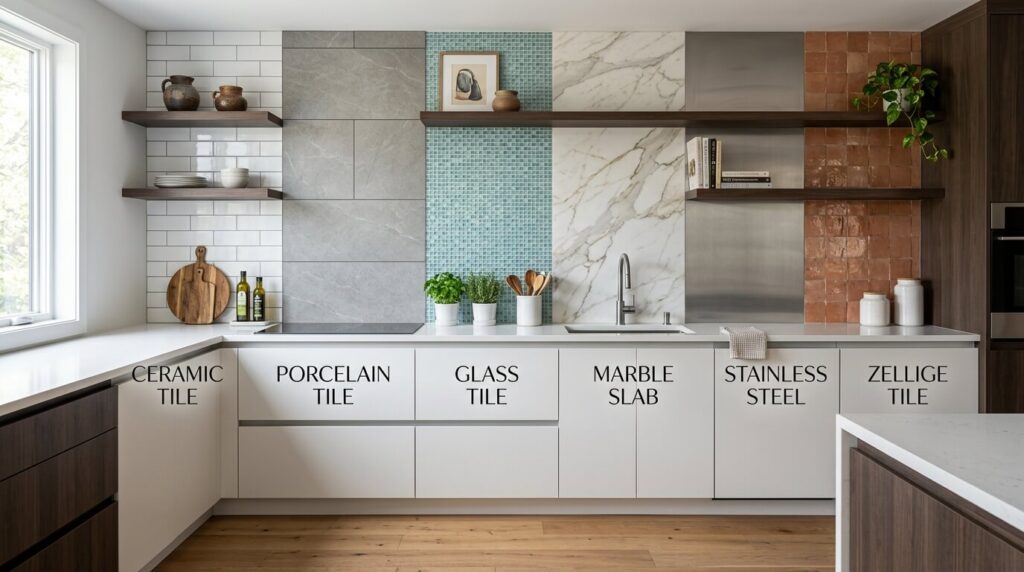
Ceramic tile is the most widely used backsplash material in North America, and for good reason. Made from clay that’s fired in a kiln and typically coated with a glaze, it’s available in an enormous range of colors, shapes, sizes, and finishes—from glossy subway tiles to matte geometric shapes, handmade artisan tiles, and mosaic patterns.
Types of ceramic tile for backsplashes:
- Glazed ceramic (most common; gloss, matte, or satin finish)
- Subway tile (classic 3″×6″ format; also available in beveled and handmade versions)
- Mosaic tile (small tiles, often on mesh sheets; great for intricate patterns)
- Hand-painted ceramic (Talavera, Portuguese azulejos)
- Crackle-glazed ceramic (decorative finish with visible crazing)
- Large-format ceramic (12″×24″ and larger for a modern, minimal look)
Pros:
- Most affordable tile option; basic glazed ceramic starts around $2–$5/sq ft
- Extremely versatile in color, shape, and finish
- Lightweight and relatively easy to DIY install
- Glazed surface resists staining when grout is also sealed
- Easy to repair—individual tiles can be replaced
Cons:
- Grout lines require regular sealing and cleaning; grout can absorb stains and harbor mildew
- Lower-quality glazes can chip or crack over time
- Not as dense or durable as porcelain
Cost range: $2–$30/sq ft (materials); $10–$25/sq ft installed
Maintenance: Low-moderate; seal grout annually
Best for: Budget-conscious renovations, traditional and transitional kitchens, DIY projects
2. Porcelain Tile
Porcelain is a denser, harder, and less porous version of ceramic tile. It’s fired at higher temperatures, which makes it more resistant to moisture, stains, scratches, and freeze-thaw cycles. Many homeowners choose porcelain over ceramic for a kitchen backsplash because it requires less ongoing maintenance, even though it costs more upfront.
Modern porcelain manufacturing technology allows tiles to convincingly mimic the look of marble, concrete, wood grain, and natural stone—often at a fraction of the price.
Types of porcelain tile for backsplashes:
- Standard glazed porcelain
- Through-body porcelain (color runs all the way through; chips are less noticeable)
- Rectified porcelain (precision-cut for tight grout lines)
- Large-format porcelain panels/slabs (24″×48″ and larger; near-seamless look)
- Wood-look porcelain plank
Pros:
- Extremely durable and hard-wearing
- Highly stain- and scratch-resistant
- Does not require sealing (unlike natural stone)
- More realistic stone and wood mimicry than ever before
- Large-format options create a clean, near-groutless look
Cons:
- Higher upfront cost than ceramic
- Harder to cut; usually requires professional installation for large-format slabs
- Fewer handcrafted, artisan options compared to ceramic
Cost range: $3–$20/sq ft (materials); $12–$35/sq ft installed
Maintenance: Very low; wipe clean with mild detergent
Best for: High-use kitchens, modern and contemporary designs, homeowners who want minimal maintenance
3. Glass Tile
Glass tile has become increasingly popular in kitchen backsplashes for its ability to reflect light, making spaces feel larger and brighter. It’s entirely non-porous, which means it won’t absorb grease, moisture, or food stains. Glass tiles are available in classic subway formats, small mosaic squares, large panels, and hand-blown artisan varieties.
Types of glass tile for backsplashes:
- Standard glass mosaic (1″×1″ to 4″×4″; often on mesh sheets)
- Glass subway tile
- Frosted or textured glass
- Mirrored glass tile
- Hand-blown art glass
- Recycled glass tile
Pros:
- Non-porous; impervious to stains and moisture
- Highly reflective; amplifies natural and artificial light
- Easy to clean—glass cleaner and a cloth is all you need
- Grout-free panel options available
- Available in an almost limitless spectrum of colors and finishes
Cons:
- More expensive than ceramic or porcelain in most cases
- Requires specialized cutting tools; typically not ideal for DIY
- Can show fingerprints, smudges, and water spots more easily than matte surfaces
- Prone to chipping if struck hard, particularly in high-heat areas near the range
- Adhesive must be white or color-matched, as tile is translucent
Cost range: $7–$30/sq ft (materials); $15–$35/sq ft installed
Maintenance: Low; however, shows smudges and requires frequent wiping near the cooktop
Best for: Contemporary and coastal kitchens, dark or small kitchens that need more light, wet areas near the sink
4. Natural Stone Tile
Natural stone backsplashes—including marble, granite, slate, travertine, limestone, and quartzite—bring a sense of organic beauty and individuality to the kitchen. Because each slab and tile is cut from unique stone, no two installations are ever identical.
Marble
Marble is considered the most prestigious kitchen backsplash material for good reason. Its distinctive veining, smooth surface, and natural translucency create an effect that no manufactured material fully replicates. Carrara, Calacatta, and Statuario are the most popular marble varieties for kitchen use.
Pros:
- Timeless, luxurious aesthetic
- Each tile or slab is unique
- Increases home resale value
- Available in honed (matte) and polished finishes
Cons:
- Porous; must be sealed at least once a year
- Susceptible to etching from acidic foods and liquids (lemon juice, vinegar, tomatoes)
- Prone to staining if not properly sealed
- Higher cost than most other tile materials
Cost range: $20–$50/sq ft (materials); $25–$60/sq ft installed
Granite
Granite is denser than marble, making it more resistant to scratching and less prone to etching. It’s frequently used in countertops and works equally well as a backsplash, particularly when matching the counter material for a cohesive look.
Pros:
- Extremely hard and scratch-resistant
- Wide range of colors and patterns
- More heat-resistant than marble
- Adds real estate value
Cons:
- Still porous; requires periodic sealing
- Heavier than tile alternatives; walls must be structurally sound
- Not as visually refined as marble
Cost range: $15–$40/sq ft (materials)
Slate
Slate offers a distinctly textural, earthy appearance in grays, greens, purples, and blacks. It’s highly durable and naturally slip-resistant due to its cleft surface.
Pros:
- Unique rustic texture and appearance
- Naturally resistant to moisture and frost
- Durable and long-lasting
Cons:
- Limited color palette compared to other stones
- Surface can flake over time if not properly sealed
- Grout lines require regular maintenance
Cost range: $10–$25/sq ft (materials)
Travertine
Travertine is a form of limestone with a characteristic pitted, porous surface. It gives kitchens a warm, Mediterranean feel, but its natural holes must be filled (grouted or epoxy-filled) before installation as a backsplash.
Pros:
- Warm, earthy, organic aesthetic
- Works well in Tuscan and Mediterranean kitchen styles
- Durable when properly sealed
Cons:
- Very porous; requires thorough sealing and periodic resealing
- Natural pits can trap grease and food debris if not filled
- Not suitable for high-grease cooking areas without consistent maintenance
Cost range: $8–$30/sq ft (materials)
5. Natural Stone Slab
Rather than individual tiles, a stone slab backsplash is a single continuous piece of material—usually marble, granite, quartzite, or soapstone—cut to fit the wall. This eliminates grout lines entirely, creating a seamless, high-end look that many designers favor.
Pros:
- No grout lines; dramatically easier to clean
- Creates a cohesive, luxurious appearance—especially when matched to the countertop
- Unique veining patterns flow uninterrupted across the wall
- Adds significant perceived and actual home value
Cons:
- Most expensive option; slab prices vary widely but often exceed $80–$150/sq ft installed
- Must be professionally fabricated and installed
- Heavy; requires structural wall assessment
- Stone is still porous and requires sealing
Cost range: $50–$200+/sq ft installed
Best for: Luxury kitchen renovations, open-plan kitchens where the backsplash is a focal point

6. Engineered Quartz
Engineered quartz is manufactured from approximately 90–95% crushed natural quartz crystals bound with polymer resins. The result is a non-porous, highly durable surface that comes in a wide spectrum of colors and patterns—many mimicking marble convincingly without its maintenance demands.
Pros:
- Non-porous; does not require sealing
- Scratch-, stain-, and heat-resistant (within normal kitchen conditions)
- Very consistent appearance—no veining surprises
- Can match quartz countertops for a seamless look; combined templating reduces installation cost
- Easily cleaned with soap and water
Cons:
- Engineered stone is not DIY-friendly; professional installation required
- Slightly artificial appearance compared to real stone (to a trained eye)
- Can be damaged by prolonged exposure to direct, intense heat
Cost range: $20–$60/sq ft installed
Best for: Modern kitchens, homeowners who love the stone look without the upkeep, pairing with quartz countertops
7. Stainless Steel
Stainless steel backsplashes are a fixture in professional kitchens and have found a strong following in modern and industrial-style home kitchens. They’re typically installed as flat sheets or panels and are prized for their heat resistance and hygienic, easy-to-clean surface.
Pros:
- Exceptional heat resistance—ideal directly behind gas ranges
- Non-porous and hygienic; bacteria have nowhere to grow
- Very easy to clean with warm water and a microfiber cloth
- Adds a professional, industrial aesthetic
- Durable; won’t crack, warp, or delaminate
Cons:
- Shows fingerprints, water spots, and smudges readily
- Scratches over time (though some find brushed-steel patina appealing)
- Harder to customize in terms of color and pattern
- Chemical cleaning agents can dull the surface; only mild soap recommended
- Can dent under sharp impact
Cost range: $10–$40/sq ft (materials); $15–$50/sq ft installed
Maintenance: Easy in terms of cleaning, but fingerprints require frequent attention
Best for: Industrial and modern kitchens, serious cooks who want maximum heat and stain resistance
8. Copper Tile and Metal Accents
Copper backsplashes bring warmth, depth, and a handcrafted character that no other material matches. They’re typically used in traditional, farmhouse, or arts-and-crafts kitchens. Like stainless steel, copper is naturally antimicrobial.
Pros:
- Unique, warm appearance that develops a natural patina over time
- Naturally antimicrobial surface
- Durable and heat-resistant
Cons:
- Develops a patina that some find attractive but others may not
- Can dent with hard impact
- More expensive than standard ceramic or porcelain
- Requires specific cleaning products to maintain appearance or encourage controlled patina
Cost range: $15–$50/sq ft (materials)
9. Wood and Reclaimed Wood
Wood backsplashes are uncommon but striking. Reclaimed barn wood, shiplap, and butcher block-style wood panels bring warmth and rustic charm to farmhouse, Craftsman, and cottagecore kitchens. Because wood is inherently porous and flammable, it must be carefully treated and installed only in appropriate locations—away from direct heat sources.
Pros:
- Warm, natural aesthetic unlike any other material
- Reclaimed wood adds sustainable, story-rich character
- Relatively affordable compared to stone
- Can be painted, stained, or whitewashed
Cons:
- Must be sealed or laminated to resist moisture and grease
- Requires ongoing maintenance (sealing, oiling)
- Not suitable directly behind a gas range or near an open flame
- Can warp, swell, or crack with persistent moisture exposure
- May not comply with local building codes in certain installations
Cost range: $5–$30/sq ft (materials)
Best for: Farmhouse, rustic, and Scandinavian kitchens—away from the cooktop
10. Peel-and-Stick Backsplash Panels
Peel-and-stick tiles and panels are by far the most budget-friendly and renter-friendly option. Available in vinyl, faux stone, faux brick, metal-look, and mosaic patterns, they require no adhesive, no grout, and no professional installation. Simply clean the wall, peel the backing, and stick them in place.
Pros:
- Extremely inexpensive (often $1–$5/sq ft)
- No tools, no grout, no professional help required
- Completely reversible—ideal for renters
- Wide variety of styles available
- Can be installed in an afternoon
Cons:
- Not durable; edges can peel, especially in humid environments
- Looks noticeably less realistic than genuine tile or stone up close
- Limited longevity (typically 3–7 years before replacement)
- Not heat-resistant; not suitable near the stove
- Can damage wall paint or drywall upon removal
Cost range: $1–$10/sq ft (materials); DIY installation
Best for: Renters, temporary updates, low-traffic areas away from the cookto

Bonus: Zellige Tile
Worth a special mention, Zellige tile is a traditional Moroccan handmade tile cut from glazed terracotta. Its irregular surface, slight color variations tile to tile, and rich jewel-toned glazes make it one of the most visually striking (and on-trend) backsplash options available today.
Pros:
- Extraordinarily beautiful; no two tiles are alike
- Works in both traditional and contemporary kitchens
- Available in deep, saturated colors not achievable in mass-produced tiles
Cons:
- Expensive; $20–$60/sq ft and up
- Requires skilled installation due to irregular thickness
- Grout lines require sealing and attention
Kitchen Backsplash Materials Comparison Table
| Material | Cost (Materials/sq ft) | DIY Friendly | Maintenance | Heat Resistance | Best Style Match |
|---|---|---|---|---|---|
| Ceramic Tile | $2–$30 | Yes | Low–Moderate | Good | Traditional, Transitional |
| Porcelain Tile | $3–$20 | Moderate | Very Low | Excellent | Modern, Contemporary |
| Glass Tile | $7–$30 | No | Low | Moderate | Contemporary, Coastal |
| Marble Tile | $20–$50 | No | High | Moderate | Luxury, Classic |
| Natural Stone Slab | $50–$200+ | No | Moderate | Excellent | Luxury, Open-Plan |
| Engineered Quartz | $20–$60 | No | Very Low | Good | Modern, Transitional |
| Stainless Steel | $10–$40 | Moderate | Low | Excellent | Industrial, Modern |
| Copper / Metal | $15–$50 | No | Moderate | Good | Farmhouse, Traditional |
| Wood / Reclaimed | $5–$30 | Yes | High | Poor | Farmhouse, Rustic |
| Peel-and-Stick | $1–$10 | Yes | Low | Poor | Temporary / Rental |
| Zellige | $20–$60 | No | Moderate | Good | Contemporary, Eclectic |
How to Choose the Right Kitchen Backsplash Material
Match the Material to Your Cooking Habits
If you cook daily with high heat on a gas range, prioritize heat-resistant materials: porcelain tile, natural stone, stainless steel, or quartz directly behind the stove. Reserve decorative materials like glass, wood, or peel-and-stick for the area behind the sink or along a lower-traffic wall.
Coordinate with Countertops and Cabinets
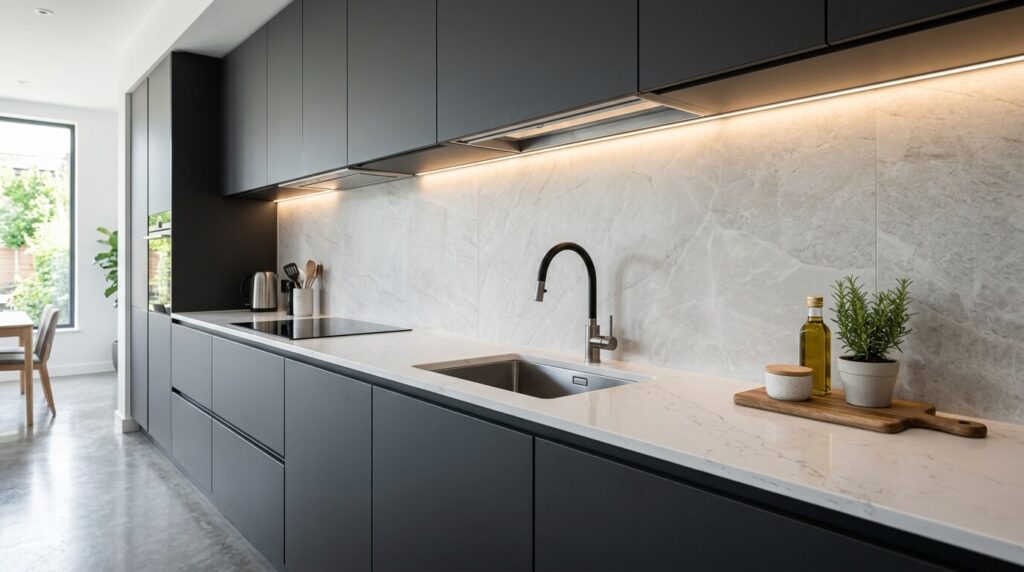
A backsplash doesn’t need to match your countertops, but it should complement them. White shaker cabinets pair well with almost anything. Dark, dramatic countertops (black granite, deep quartz) often benefit from a lighter, textured backsplash to balance the visual weight. If you’re using quartz countertops, consider extending the same material up the wall as a slab backsplash—this reduces templating costs and creates a cohesive, spa-like effect.
Consider Grout Carefully
Grout lines are often the biggest maintenance challenge in any tiled backsplash. Lighter grout shows stains more easily than darker grout, but dark grout can look dated. Using epoxy grout (rather than standard cement grout) dramatically reduces staining. Alternatively, choosing large-format tiles or slabs minimizes grout lines entirely.
Think About Long-Term Resale Value
Trendy materials may look stunning today but can look dated in 5–10 years. Subway tile, natural stone, and neutral porcelain have shown staying power in resale contexts. Peel-and-stick and highly pattern-specific tiles are harder to recoup value from.
Installation Overview: What to Expect
Tile installation (ceramic, porcelain, glass):
The wall is primed, tile adhesive is applied, tiles are set and grouted, and grout is sealed once cured. Typical timeline: 1–3 days for a standard kitchen backsplash, plus 24–72 hours curing time.
Stone slab or large-format porcelain installation:
Requires professional templating, fabrication, and installation. The wall substrate must be structurally sound and level. Timeline: 1–2 weeks from template to installation.
Stainless steel sheet installation:
Sheets are cut to size and adhered directly to the wall. Relatively quick; a professional can complete a standard backsplash in a few hours.
Peel-and-stick:
DIY installation in 2–4 hours. No special skills required.
Maintenance Guide by Material
Ceramic and porcelain tile:
Wipe daily with a damp cloth. Seal grout lines once a year with a penetrating grout sealer. Replace cracked or chipped tiles promptly to prevent moisture penetration.
Glass tile:
Wipe with glass cleaner or a damp microfiber cloth. Avoid abrasive pads. Polish dry to prevent water spots.
Marble and natural stone:
Clean with a pH-neutral stone cleaner—never vinegar or lemon juice. Reseal at least once a year (some stones require twice yearly). Blot spills immediately, especially from acidic foods.
Quartz:
Clean with mild dish soap and warm water. Quartz does not need sealing. Avoid exposing it to prolonged direct heat.
Stainless steel:
Wipe with warm water and a microfiber cloth. Never use steel wool or harsh abrasives. Wipe in the direction of the metal’s grain. Avoid chlorine-based cleaners, which can dull the surface.
Wood:
Wipe immediately after cooking. Reapply sealant or food-safe oil every 6–12 months. Avoid prolonged water exposure near the sink.
Common Mistakes to Avoid
Not sealing natural stone. Marble, granite, travertine, and slate are all porous. Unsealed stone will stain almost immediately in a kitchen environment.
Choosing grout color as an afterthought. Grout lines cover 15–25% of a tiled backsplash’s visible surface. A poor grout color choice can undermine the entire installation.
Ignoring the transition at the counter. The joint where the backsplash meets the countertop needs a bead of silicone caulk (not grout), which can flex with thermal movement and prevent water infiltration.
Installing wood or peel-and-stick directly behind the stove. Both materials are a fire and heat hazard in that location. Always use heat-rated materials within 12 inches of a gas range or electric cooktop.
Prioritizing looks over function. A beautiful marble backsplash that stains after the first cooking session will be a constant source of frustration. Match the material to your actual kitchen habits.
FAQ: Kitchen Backsplash Materials
What is the easiest kitchen backsplash material to clean?
Glass tile and porcelain are the easiest to clean because both are non-porous. A quick wipe with a damp cloth removes most splatter. Stainless steel is similarly easy to wipe down, though it shows fingerprints more readily.
What is the most durable kitchen backsplash material?
Porcelain tile and natural stone slabs (particularly granite and quartzite) are the most durable. Both are highly resistant to scratching, heat, and moisture when properly installed and—in the case of stone—sealed.
How much does it cost to install a kitchen backsplash?
Total installed cost typically ranges from $400–$1,500 for a standard kitchen using ceramic or porcelain tile. Natural stone slabs and specialty materials can push the total to $3,000–$8,000 or more.
What is the best backsplash material for behind a gas stove?
Stainless steel, porcelain, ceramic, and natural stone are all excellent choices directly behind a gas stove due to their heat resistance. Avoid glass (may chip near frequent heat exposure), wood, and peel-and-stick entirely in this zone.
Does a backsplash need to go all the way to the ceiling?
No. Most standard kitchen backsplashes run from the countertop to the bottom of upper cabinets—typically 18 inches. Full-height backsplashes (floor to ceiling, or countertop to ceiling) are a design choice, not a functional requirement, and can dramatically elevate a kitchen’s visual impact.
What is the cheapest kitchen backsplash option?
Peel-and-stick vinyl tiles are the least expensive option at $1–$5/sq ft with no installation cost. Basic glazed ceramic subway tile is the most affordable permanent option, starting around $2–$5/sq ft plus installation.
Is marble a good choice for a kitchen backsplash?
Marble is beautiful and timeless, but it requires consistent maintenance. Acidic foods and liquids (vinegar, lemon, tomatoes, wine) can etch the surface even if it’s sealed. If you cook heavily and aren’t prepared to seal and clean carefully, porcelain in a marble look may be a more practical alternative.
Can I install a backsplash myself?
Yes, for many materials. Ceramic tile, peel-and-stick panels, and subway tile are popular DIY backsplash projects. Glass tile, large-format porcelain slabs, and natural stone slabs require professional installation.
How often does a kitchen backsplash need to be replaced?
Quality tile and stone backsplashes installed correctly can last 20–50 years or more. Peel-and-stick options typically need replacement every 3–7 years. Grout may need refreshing every 5–10 years depending on use and maintenance.
What backsplash material increases home value the most?
Natural stone slabs (marble, quartzite), high-quality porcelain, and timeless ceramic tile installations tend to add the most perceived value in home sales. Trendy or DIY materials like peel-and-stick have little to no impact on resale value.
What is Zellige tile and why is it popular?
Zellige is a traditional handmade Moroccan tile with an irregular, slightly uneven glaze that gives it a jewel-like shimmer. Its handcrafted nature means every tile is slightly different, creating a backsplash with real visual depth. It surged in interior design popularity in the early 2020s and continues to be a sought-after option.
What is the best grout for a kitchen backsplash?
Epoxy grout is the most stain- and moisture-resistant option and is ideal for kitchen backsplashes. Cement-based grout (standard sanded or unsanded) is more affordable but must be sealed annually.
Should my backsplash match my countertops?
It doesn’t have to match, but it should coordinate. Many designers recommend choosing one dominant material and using the other as a complement. Matching the backsplash to countertop material (especially quartz) creates a cohesive, spa-like effect but isn’t required.
What backsplash material is best for a rental property?
Peel-and-stick tiles are ideal for renters since they’re removable and inexpensive. For landlords investing in a rental property, glazed ceramic tile offers the best balance of low cost, durability, and tenant appeal.
How thick should a backsplash tile be?
Standard backsplash tiles are typically 6–10mm thick. Thinner tiles (3–6mm) are available for glass and some porcelain mosaic sheets. Large-format stone slabs may be 20mm or more. Tile thickness affects the adhesive required and the transition edge at countertops.
