
A white and blue kitchen pairs the brightness of white with a color that never reads as trendy or dated. Quick answer: the most durable white and blue kitchen combinations use white for cabinets, countertops, or walls, and blue as an accent — on an island, lower cabinets, a backsplash, or hardware — so the space stays light while still feeling designed rather than plain.
This color duo has decorated kitchens for centuries, from Dutch delftware to New England Cape Cod houses, and it keeps showing up in 2026 trend forecasts specifically because it isn’t tied to one decade the way, say, all-grey kitchens are. Below are nine ways to use it, what shades actually pair well, and where people get it wrong.
Why blue and white keeps working in kitchens
White reflects light and makes a room feel larger — useful in a kitchen, where cabinets, appliances, and counters already crowd the sightlines. Blue is the rare accent color that reads as calm rather than loud, so a blue kitchen island or blue lower cabinets add contrast without making the room feel busy. Designers describe the pairing as creating a tranquil, airy effect specifically because blue is associated with calm and white with openness — a combination that works whether the rest of your kitchen leans coastal, traditional, or modern.
9 white and blue kitchen combinations
1. Two-tone cabinets: white uppers, blue lowers
This is the most common way to introduce blue without overcommitting. White upper cabinets keep the ceiling line feeling tall and open; blue lower cabinets ground the room. A dark worktop will visually divide the two zones, while a white or light marble worktop lets the white area extend further — a useful trick in a smaller kitchen.
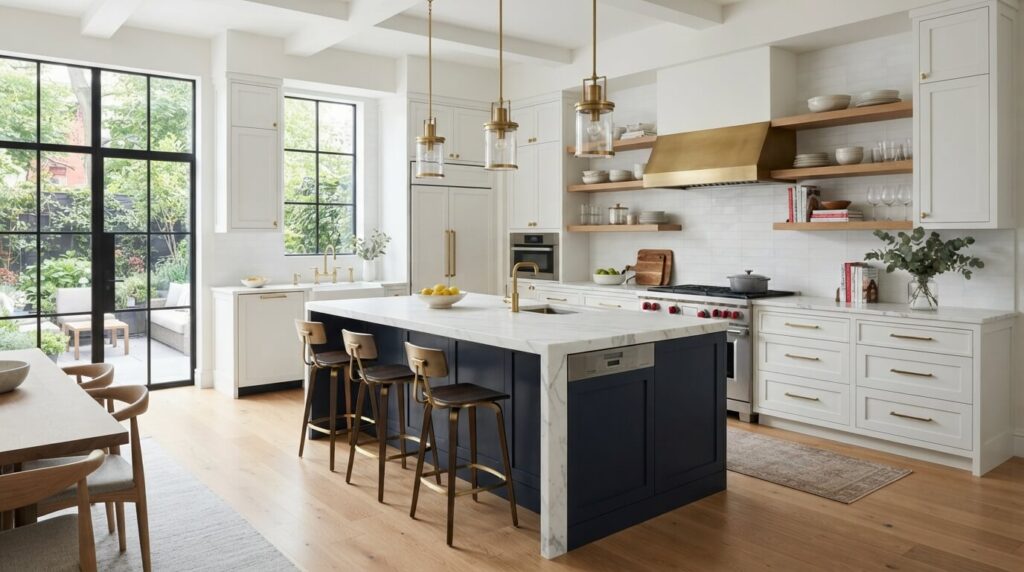
2. All-white cabinets with a blue island
If you’re not ready to commit to blue cabinetry throughout, put it on the island only. This works especially well in open-plan kitchens where the island is the visual anchor of the room. Navy, cobalt, or a softer slate blue all read differently here — navy for drama, slate for something quieter.
3. Navy blue for sophistication
Navy is dark enough to feel dramatic but warmer and softer than black. Paired with a clean white backsplash and countertop, it creates high contrast without harshness. Benjamin Moore’s Hale Navy (HC-154) is a frequently cited example because it shifts slightly warm or cool depending on the light and surrounding colors, which keeps a navy kitchen from feeling flat.
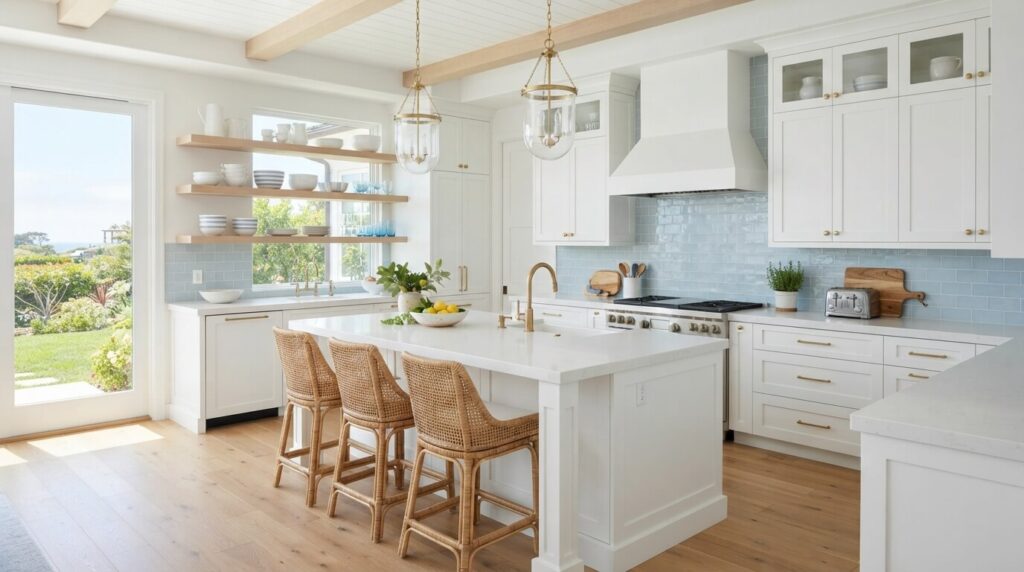
4. Coastal chic (light blue + white)
For a beachy, airy look, keep white dominant — walls, cabinets, shiplap — and use pale or sky blue only in accents: a backsplash, barstools, dishware displayed on open shelving. This is the lowest-commitment way to try the combination and the easiest to update later.
5. Shaker-style cabinets in blue
Shaker’s recessed-panel doors give texture without fuss, which is part of why the style has stayed popular across decades of kitchen trends. Blue Shaker cabinets with a high-gloss white worktop keep the look from feeling too “cottage.”
6. Blue and white tiled backsplash
If you don’t want to commit to cabinet color at all, the backsplash is the easiest entry point. A soft blue subway tile against white cabinets and counters is the most common execution; patterned blue-and-white tile (evoking classic china) is a bolder, more traditional-leaning option.
7. Multitone blue cabinets
Instead of one shade of blue, layer two or three tones — a matte navy on lower cabinets, a lighter blue-grey on an island, white on uppers. This adds depth without introducing a third color family, which keeps the palette cohesive.
8. Statement blue appliances
A single blue appliance — a range, a retro-style fridge — against white cabinetry becomes a conversation piece rather than a full color commitment. It’s also the easiest of all these options to change later, since you’re not repainting cabinetry.
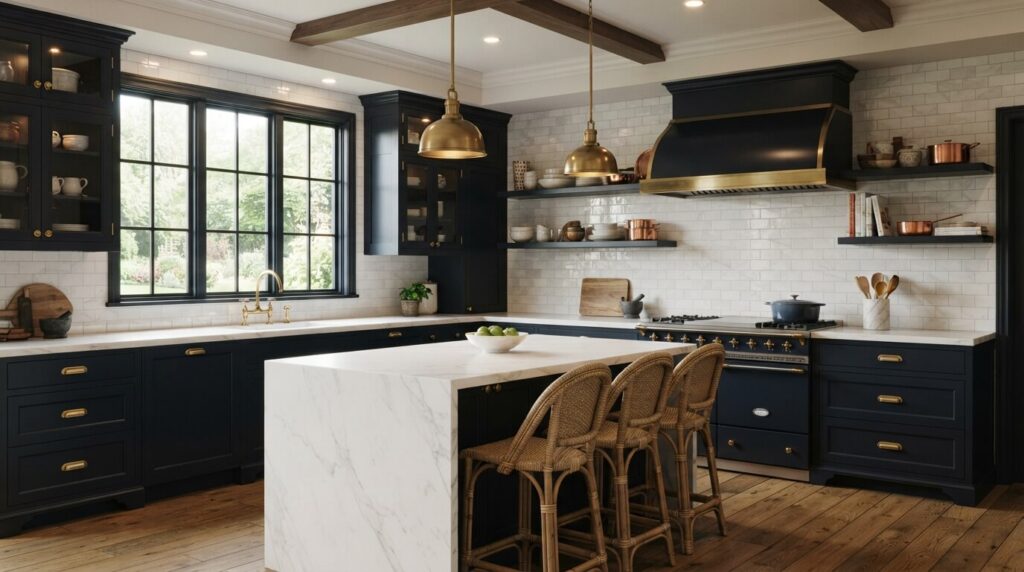
9. Moody, dramatic dark blue
Dark or near-black blue cabinets read as more multi-tonal and less severe than true black. Balance the weight with white marble or marble-look countertops, subway tile, and warm metal (brass or gold) hardware to keep the room from feeling heavy.
Blue and white kitchen combinations at a glance
| Look | Where blue goes | Best for | Commitment level |
|---|---|---|---|
| Two-tone cabinets | Lower cabinets | Small to mid-size kitchens | Medium |
| Blue island | Island only | Open-plan kitchens | Low–medium |
| Navy sophistication | Full cabinet run | Formal, traditional kitchens | High |
| Coastal chic | Accents/backsplash only | Beach or cottage-style homes | Low |
| Shaker blue | Full cabinet run | Transitional/farmhouse kitchens | High |
| Tiled backsplash | Backsplash only | Renters, budget-conscious remodels | Low |
| Multitone cabinets | Two+ cabinet zones | Kitchens wanting depth/dimension | Medium |
| Statement appliance | One appliance | Testing the color before committing | Very low |
| Moody dark blue | Full cabinet run | Design-forward, dramatic kitchens | High |
What color hardware works with blue and white kitchens
Metal finish changes the whole feel of a blue and white kitchen:
- Brass or gold — warms up navy or dark blue and reads as more traditional or “quiet luxury”
- Black or dark bronze — sharpens lighter, softer blues and adds contrast without competing with the color scheme
- Brushed nickel or chrome — the safest, most neutral choice, especially with coastal or Shaker-style blues
Does a blue and white kitchen affect resale value?
Neutral kitchens are generally the safer resale bet, but this isn’t an all-or-nothing decision. Deep blue cabinetry paired with quality materials — real wood, stone counters, good hardware — is increasingly attractive to buyers rather than a liability, and colorful cabinetry overall has been on the rise in buyer interest in recent years. The lower-commitment options above (blue island, backsplash, accents) carry essentially no resale risk since they’re easy to change.
Do blue cabinets make a small kitchen feel smaller?
Not if you manage the proportions. Keep the ceiling area and upper cabinets white, use blue only on lower cabinets or the island, and pick a lighter blue rather than navy if the room gets limited natural light. White countertops and a light-colored floor extend the sense of space regardless of the accent color.
Common mistakes to avoid
- Skipping texture. A flat, two-color kitchen with no variation in material (wood, stone, tile, brushed metal) can feel stark rather than intentional.
- Mixing too many blue undertones. A warm navy and a cool sky blue in the same room can clash — stick to one temperature of blue, or use intentional multitone shades from the same paint family.
- Ignoring the worktop. Countertop color does as much work as cabinet color in deciding whether the space feels open or divided.
Final thoughts
A blue and white kitchen isn’t a passing trend — it’s one of the few color combinations that’s shown up in kitchen design for decades without going stale, because it flexes from subtle coastal accents to full navy drama depending on how much of it you use. Start small if you’re unsure: a backsplash or an island is enough to test the look before committing to full cabinetry.
FAQ
Q: Is a blue and white kitchen still in style in 2026?
A: Yes. Multiple 2026 kitchen color forecasts list blue and white as a durable, on-trend combination, distinct from shorter-lived trends because it works across coastal, traditional, and modern styles.
Q: What shade of blue is best for kitchen cabinets?
A: It depends on light and room size. Navy suits larger or brighter kitchens looking for drama; softer slate or sky blue suits smaller or darker kitchens where you want the space to still feel open.
Q: Does a blue kitchen island go with white cabinets?
A: Yes — it’s one of the most common and lowest-risk ways to add blue to a kitchen, since white stays dominant and the island becomes a single focal point.
Q: What color hardware goes with blue and white kitchens?
A: Brass or gold warms up navy and dark blue; black or bronze adds contrast with lighter blues; brushed nickel is the safest neutral option for any shade.
Q: Are blue kitchen cabinets a good resale investment?
A: Neutral kitchens are generally the safest resale bet, but well-executed blue cabinetry with quality materials is increasingly attractive to buyers rather than a drawback, particularly in smaller doses like an island or backsplash.
Q: Do blue cabinets make a small kitchen feel smaller?
A: Not if blue is limited to lower cabinets or the island while uppers, ceiling, and countertops stay white or light-colored.
Q: What’s the easiest way to try a blue and white kitchen without a full remodel?
A: A blue and white tiled backsplash or a single blue appliance — both are low-cost, low-commitment, and easy to change later.